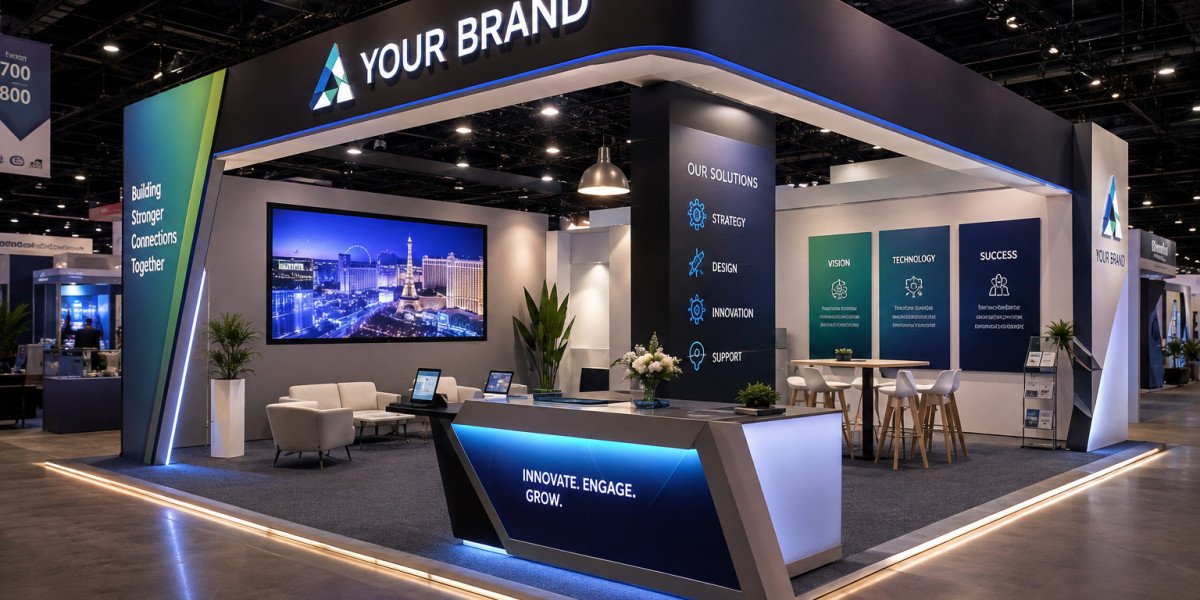

A successful exhibition starts long before attendees walk onto the show floor. Your booth needs to attract attention, communicate your brand message, and encourage visitors to stop and interact. That is why professional trade show display design plays such an important role in exhibition marketing. A well-designed display can help your business stand out among dozens or even hundreds of competing exhibitors while creating a strong first impression.
Whether you are participating in a large industry conference, a product launch, or a regional trade show, your booth design should be planned around your marketing goals. From graphics and lighting to layout and visitor engagement, every element can influence how people perceive your brand.
What Is Trade Show Display Design?
Trade show display design is the process of planning and creating the visual and physical elements of an exhibition booth. It includes the booth layout, branding, graphics, signage, lighting, product displays, furniture, technology, and interactive features.
The objective is not simply to create an attractive booth. A good display should also support your business goals.
For example, if your main objective is lead generation, your booth should make it easy for visitors to understand your offering and speak with your team. If you are launching a new product, the design should place the product at the center of attention.
A strong display combines visual appeal, functionality, branding, and visitor experience.
Why Does Trade Show Display Design Matter?
Trade shows are highly competitive environments. Visitors often walk through aisles filled with brands competing for their attention.
You may have only a few seconds to make someone notice your booth.
An effective design can help you:
Attract more visitors
Communicate your brand identity
Highlight important products or services
Create a professional impression
Encourage conversations
Generate qualified leads
Improve brand recognition
Support product demonstrations
Create memorable experiences
Your booth is often the first physical interaction attendees have with your company. Therefore, it should represent your brand clearly and professionally.
Start With Clear Exhibition Goals
Before choosing colors, graphics, furniture, or technology, determine what you want your booth to accomplish.
Different businesses attend trade shows for different reasons.
Your goals might include:
Generating leads
Increasing brand awareness
Launching a product
Meeting existing customers
Demonstrating products
Building partnerships
Collecting market feedback
Increasing sales opportunities
Once your objective is clear, your booth design becomes easier to plan.
For example, a company focused on product demonstrations may need dedicated demonstration counters and screens. A company focused on networking may require comfortable meeting areas.
The design should support the goal rather than simply look impressive.
Understand Your Target Audience
A booth should be designed for the people you want to attract.
Think about who will attend the event and what they are looking for. Are they business owners, purchasing managers, technical professionals, consumers, or industry decision-makers?
Understanding your audience can influence:
Booth messaging
Graphics
Product placement
Demonstration areas
Seating
Interactive technology
Promotional materials
Your visitors should quickly understand why your booth is relevant to them.
Create a Strong Visual Hierarchy
A trade show booth can contain many elements, but visitors should not feel overwhelmed.
Visual hierarchy helps guide attention toward the most important information.
Your booth might prioritize information in this order:
Company name or logo
Main value proposition
Key product or service
Supporting information
Call to action
Your most important message should be visible from a distance.
Avoid covering every available surface with text. Large, readable messages are generally more effective than paragraphs of information.
Choose the Right Booth Layout
The booth layout influences how visitors move through your space.
A good layout should provide enough room for people to enter, explore, talk with staff, and view products comfortably.
Common elements include:
Reception counters
Product displays
Demonstration stations
Meeting tables
Storage
Digital screens
Shelving
Graphic walls
Try to avoid unnecessary obstacles.
An open layout can make your booth feel more welcoming and accessible. At the same time, private meeting areas may be valuable when your sales team needs to have detailed conversations with potential clients.
Make Your Branding Consistent
Your trade show booth should look like an extension of your overall brand.
Use consistent:
Brand colors
Fonts
Logo placement
Imagery
Messaging
Graphic styles
Visitors should be able to recognize your company quickly.
If your website, advertisements, packaging, and social media all use a particular visual identity, your booth should follow the same branding approach.
Consistency builds familiarity and makes your business appear more professional.
Use Graphics Strategically
Graphics are among the most noticeable elements of a booth.
However, effective graphics are not necessarily complicated graphics.
A good trade show graphic should communicate a clear idea quickly.
Instead of writing:
“Discover our comprehensive portfolio of innovative solutions designed to help businesses improve operational efficiency and achieve sustainable growth.”
You might communicate the same concept with:
“Smarter Solutions. Better Business Results.”
Your graphics should be readable from different distances and angles.
Large headlines, strong imagery, and concise messaging can help visitors understand your offering before they even enter the booth.
Select Colors Carefully
Color can influence how people perceive your brand.
Your existing brand colors should usually be the foundation of your booth design. However, you can use complementary colors to create contrast and highlight important areas.
For example, a bright accent color can draw attention toward:
A product
A promotional message
A call-to-action
A demonstration area
A reception counter
Avoid using too many competing colors. A clean and coordinated palette generally creates a stronger visual impression.
Lighting Can Change the Entire Booth
Lighting is sometimes overlooked during booth planning, but it can have a major impact.
Strategic lighting can highlight important products, graphics, logos, and architectural elements.
Consider using lighting to:
Highlight products
Improve visibility
Create depth
Emphasize branding
Draw attention to demonstrations
Create a specific atmosphere
Different lighting techniques can create different experiences. Bright, clean lighting may work well for technology brands, while warmer lighting could be suitable for lifestyle-oriented businesses.
Include Interactive Elements
Visitors are more likely to remember an experience than a static display.
Interactive elements can encourage people to spend more time at your booth.
Depending on your business, you could incorporate:
Touchscreens
Product demonstrations
Digital presentations
Virtual experiences
Interactive games
QR codes
Live demonstrations
Self-service information stations
The technology should have a purpose. Adding a screen simply because it looks modern may not improve the visitor experience.
Instead, use technology to make your message easier to understand or your products easier to experience.
Design for Visitor Flow
Think about what happens when someone approaches your booth.
Can they immediately see what you offer?
Can they easily enter?
Where will they stop?
Where will they talk with your team?
Where will demonstrations happen?
Where can sales staff have detailed conversations?
Planning visitor flow can prevent congestion and make the booth easier to navigate.
The goal is to create a natural journey from attention to interaction to conversion.
Create a Dedicated Product Display Area
If your business sells physical products, give important products enough space to be noticed.
Avoid displaying too many products together.
Instead, identify your most important products and give them priority.
You can use:
Display shelves
Pedestals
Counters
Transparent cases
Demonstration stations
Digital screens
Make sure products are positioned where visitors can see them easily.
If possible, allow visitors to interact with the products. Touching, testing, or seeing a product in action can make the experience more engaging.
Add Comfortable Meeting Areas
Trade shows are not only about attracting visitors. They are also opportunities to develop business relationships.
A comfortable meeting area can give your team space to have longer conversations with qualified prospects.
Depending on the booth size, you might include:
Small discussion tables
Lounge seating
Semi-private meeting rooms
High-top tables
Private conference areas
The meeting space should be comfortable without taking over the entire booth.
Keep Your Messaging Simple
One of the most common booth design mistakes is trying to communicate too much.
Your visitors are busy. They may be walking toward another booth, attending a session, or searching for a specific product.
Your message should be easy to understand quickly.
A simple messaging structure can work well:
What do you offer?
Who do you help?
Why should visitors care?
What should they do next?
This approach keeps your booth communication focused.
Design for Different Viewing Distances
Your booth should work at multiple distances.
Someone walking down the aisle should be able to see your brand and primary message from far away.
As visitors get closer, they should discover additional information.
Think of your booth in three layers:
Long Distance
Focus on:
Logo
Brand name
Main message
Large graphics
Medium Distance
Highlight:
Products
Services
Benefits
Key features
Close Distance
Provide:
Detailed information
Product specifications
Brochures
Demonstrations
QR codes
Sales conversations
This layered approach allows visitors to discover information naturally.
Avoid Common Trade Show Display Design Mistakes
Even a large booth can perform poorly if its design is not carefully planned.
Common mistakes include:
Too Much Text
Large blocks of text are difficult to read on the trade show floor.
Weak Branding
If visitors cannot quickly identify your company, your booth loses an important opportunity.
Poor Lighting
Dark or unevenly lit displays can make graphics and products less attractive.
Cluttered Layout
Too many displays, tables, chairs, and promotional materials can make the booth uncomfortable.
Unclear Call to Action
Visitors should know what to do next, whether that means booking a meeting, scanning a QR code, trying a product, or speaking with a representative.
Ignoring Storage
Promotional materials, personal belongings, packaging, and supplies need to be stored somewhere. Hidden storage helps maintain a clean appearance.
Consider Your Booth Size
Your design should match the available booth space.
A smaller booth does not mean you cannot make an impact.
For smaller spaces, focus on:
Strong graphics
Clear messaging
Vertical displays
Compact furniture
Strategic lighting
Minimal clutter
Larger booths offer more possibilities, including meeting rooms, product demonstrations, lounges, hospitality areas, and interactive experiences.
The key is to use the space strategically.
Make Your Booth Staff Part of the Design
Your booth design and booth staff should work together.
Even the most attractive booth will not generate results if staff members are disengaged.
Train your team to:
Welcome visitors
Ask relevant questions
Explain your offering
Demonstrate products
Capture lead information
Schedule follow-up meetings
The physical display attracts attention, but your team converts that attention into meaningful conversations.
Use QR Codes Strategically
QR codes can connect physical booth experiences with digital content.
You can use them to direct visitors toward:
Product pages
Brochures
Demonstration videos
Registration forms
Appointment booking
Company websites
Special offers
Make sure the QR code has a clear purpose. Tell visitors what they will receive after scanning it.
For example:
“Scan to Get the Product Guide.”
is more effective than simply placing an unexplained QR code on a wall.
Measure Your Trade Show Results
A successful booth should be measurable.
Before the event, decide which metrics matter most.
You could track:
Number of booth visitors
Qualified leads
Product demonstrations
Meetings scheduled
QR code scans
Sales opportunities
Social media engagement
Follow-up appointments
After the show, review the results.
Which part of your display attracted the most attention?
Which message generated conversations?
Which product received the most interest?
These insights can improve your next exhibition.
How to Improve Your Display for Future Events
Trade show success is an ongoing process.
After each event, collect feedback from both visitors and your staff.
Ask questions such as:
What attracted visitors?
Which products received the most interest?
Was the booth easy to navigate?
Did visitors understand the main message?
Were meeting areas useful?
Did technology improve engagement?
What should be changed next time?
Use this information to refine your future display strategy.
Why Professional Booth Design Can Be Worth the Investment
Creating a professional exhibition display requires more than attractive graphics.
It involves understanding branding, visitor psychology, space planning, construction, logistics, lighting, technology, and event requirements.
Professional booth designers can help bring these elements together into one cohesive experience.
A professionally designed booth can also help ensure that your display is practical to transport, install, use, and dismantle.
For companies attending major exhibitions, investing in the right design can make the difference between simply occupying floor space and creating a booth that attracts meaningful attention.
Final Thoughts on Trade Show Display Design
A successful exhibition booth should do more than look impressive. It should communicate your brand, attract your target audience, support meaningful conversations, and contribute to your overall marketing objectives.
From the initial layout and graphics to lighting, product placement, technology, and visitor flow, every decision matters. The strongest displays combine creativity with strategy.
If you are preparing for an upcoming event and want a professional solution tailored to your brand, exploring trade show display design options can help you create a more engaging and memorable exhibition presence. With the right planning and execution, your booth can become one of your most effective tools for attracting visitors, generating leads, and building long-term business relationships.