
Definition
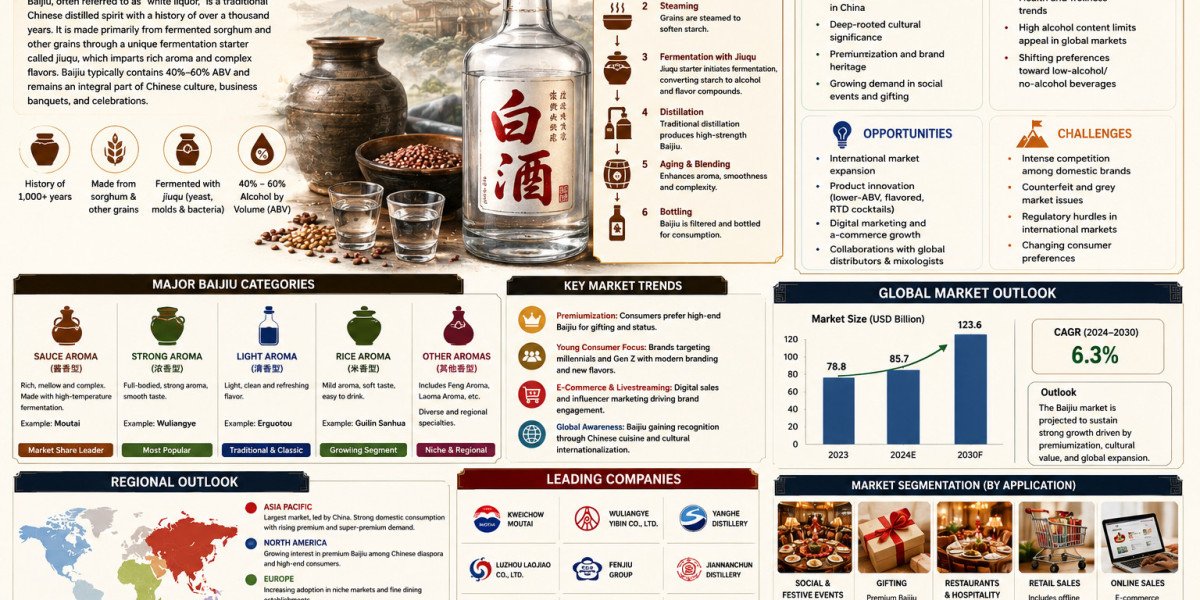
Baijiu, often referred to as “white liquor,” is a traditional Chinese distilled spirit known for its strong aroma and high alcohol content, typically ranging from 40% to 60% ABV (alcohol by volume). It is one of the oldest and most widely consumed spirits in the world, with a history spanning over a thousand years. The drink is made primarily from fermented sorghum, though other grains such as wheat, rice, barley, millet, or Job’s tears may also be used depending on the regional style and flavor profile desired. The key to Baijiu’s distinctive taste lies in its fermentation process, which employs a unique microbial culture known as jiuqu a starter composed of yeast, molds, and bacteria that play a crucial role in converting starches into alcohol and developing the spirit’s characteristic flavor complexity.
Unlike Western spirits such as vodka or whiskey, Baijiu’s production process relies heavily on solid-state fermentation and aging in underground ceramic pits, which impart deep, layered aromas and taste notes. Baijiu’s classification is based on aroma types most notably Thick-flavor (Nongxiang), Sauce-flavor (Jiangxiang), and Light-flavor (Qingxiang). Each style reflects regional preferences and distinct production methods. The Thick-flavor variety, prevalent in Sichuan and Anhui provinces, is rich and bold, while the Sauce-flavor, popularized by brands like Moutai, is savory and umami-driven. Light-flavor Baijiu, primarily from Shanxi province, offers a cleaner, crisper palate, appealing to modern consumers and entry-level drinkers.
Culturally, Baijiu occupies a central role in Chinese social life, business etiquette, and traditional ceremonies. It is considered a symbol of respect, sincerity, and hospitality, making it an indispensable part of events ranging from family gatherings and weddings to corporate banquets and government receptions. As globalization progresses, Baijiu is gradually gaining international attention, appearing in mixology, luxury dining, and global spirit competitions. This cultural export reflects China’s growing soft power and the global curiosity for authentic Asian flavors.
Recent Developments in the Baijiu Market
The Baijiu market is undergoing a significant transformation driven by the need to appeal to younger consumers both domestically and internationally. A primary trend is the diversification of product offerings, moving away from high-proof traditional styles to include lower-alcohol variants, fruit wines, and Ready-to-Drink (RTD) Baijiu cocktails. Top-tier producers are also embracing a cocktail culture integration, actively promoting the spirit as a versatile base for modern mixology to enhance its global approachability and elevate its status in culinary tourism. This strategic shift is combined with a sustained focus on premiumization, with brands emphasizing unique flavor profiles, limited-edition releases, and sophisticated, high-end packaging to target affluent and collector segments.
Market Size
Global Baijiu market was valued at USD 89.87 billion in 2025 and is projected to reach USD 112.61 billion by 2032, growing at a CAGR of 3.4% during the forecast period.